
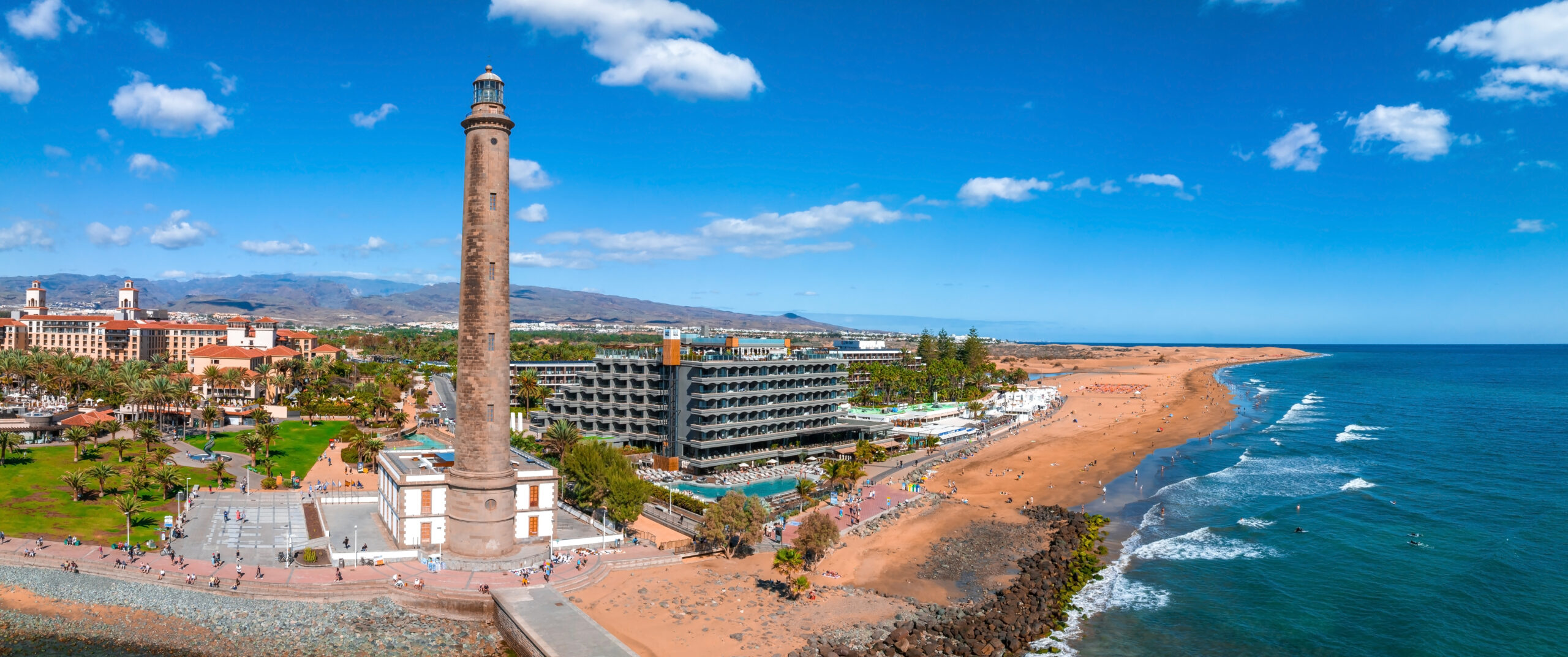
Anyone strolling through the south of Gran Canaria today sees sprawling hotel complexes, shopping centers, promenades, and palm-lined avenues. It is hard to believe that until the 1950s, this region was one of the most barren, remote, and sparsely populated areas on the entire island.
1. Before the Boom: Barren Coasts, a Lighthouse, and Tomato Plantations
Until the mid-20th century, Gran Canaria’s economic and social life took place almost exclusively in the greener north and in the capital, Las Palmas.
Lonely Landscape: The south consisted predominantly of dry scrubland, vast dune fields, and deserted beaches. Aside from the historic Faro de Maspalomas lighthouse (commissioned in 1890) and small fishing villages like Arguineguín, there was hardly any infrastructure along the coast.
Hard Agricultural Labor: In the hinterland around San Fernando and El Tablero, people lived mainly from cultivating tomatoes and bananas, which were exported via small coastal jetties. A continuous, well-developed highway to the south did not yet exist—the journey from Las Palmas took several hours along winding coastal roads.
2. The 1960s: A Vision in the Sand
The turning point came in the late 1950s and early 1960s. With the advent of the first commercial charter flights from Northern and Central Europe, Scandinavians, Germans, and Britons discovered the year-round mild climate of the Canary Islands.
The International Ideas Competition (1961): The del Castillo family, who owned large estates in the south, recognized the potential and launched an international architecture and urban planning competition in 1961 for the Maspalomas Costa Canaria project.
The Birth of Playa del Inglés: The goal was to design a modern, sunny holiday region from the drawing board. Construction began in 1962. Where previously there had been only sand, rocks, and tomato fields, roads, bungalow complexes, and the first hotels sprang up at a rapid pace—first in San Agustín, and shortly thereafter in Playa del Inglés.
3. The 70s and 80s: Boom, Concrete, and Iconic Shopping Centers
In the 1970s and 1980s, the south experienced an unprecedented construction boom:
Architecture of the Zeitgeist: Large apartment complexes and multifunctional shopping centers such as the Yumbo Centrum, the Kasbah, and the Cita in Playa del Inglés became typical of this era. They combined shops, restaurants, and nightlife in one place—a concept that became the region’s trademark.
Infrastructure Boost: The expansion of the airport in Gando and the construction of the GC-1 motorway suddenly brought the south much closer to the rest of the island. Thousands of jobs were created, and many families from the north or mainland Spain moved into newly created residential areas such as San Fernando or Vecindario.
4. The Transformation Today: Quality, Sustainability, and a New Home
After decades of rapid growth, the focus in the south of Gran Canaria has shifted significantly in recent years:
Modernization Instead of Mass Tourism: Many older hotels from the 1970s have been extensively gutted and modernized. At the same time, upscale resorts, promenades, and marinas have emerged in Meloneras and Pasito Blanco, catering to a quieter, quality-conscious audience.
Protecting Nature: Today, preserving the unique landscape takes center stage. The Dunes of Maspalomas have been under strict protection as a Special Nature Reserve (Reserva Natural Especial) since 1987 to safeguard the delicate ecosystem between the Atlantic, the palm grove (El Palmeral), and the lagoon (La Charca) for future generations.
And so, the south of the island has continued to evolve over the decades: what was repeatedly the perfect holiday destination for some became an emigration destination and a new home for others.